Do you believe that Sterility vs Infertility are synonymous? You’re going to be surprised, though. Despite having extremely different origins and implications in the field of fertility, these two phrases are frequently used interchangeably. To help you grasp the differences between these two terminologies, we have brought you this article.
We’ll also look at how medical professionals identify and handle these both fertility problems.
What is the meaning of Sterility?
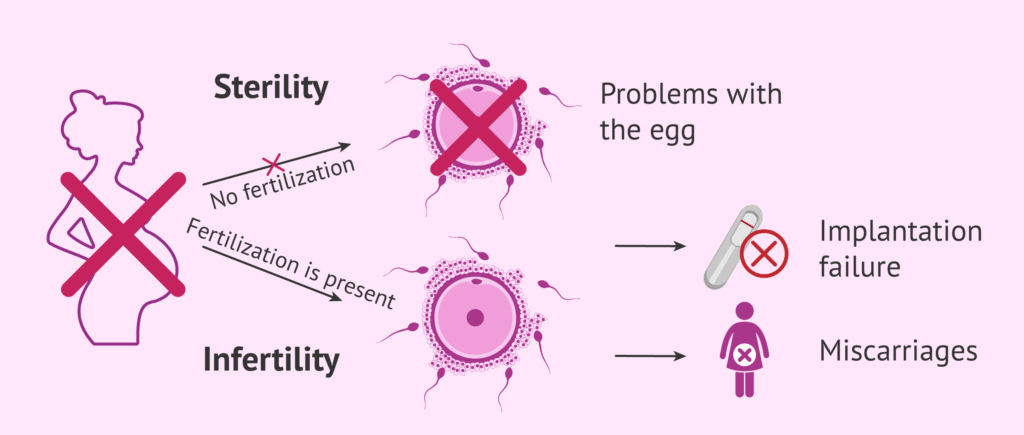
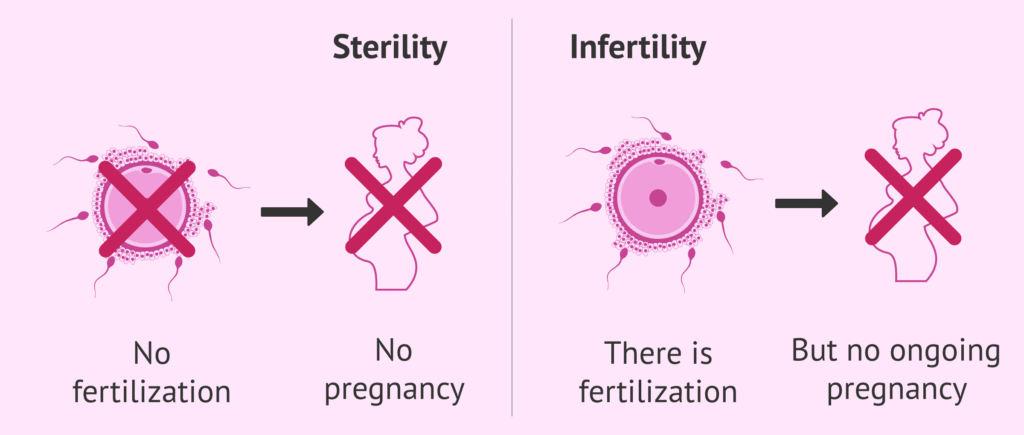
The inability to conceive, no matter how frequently or how long a couple tries, is known as sterility. This occurs when the reproductive organ cannot produce gametes (eggs and sperm) or when structural abnormalities, such as blocked or absent fallopian tubes and vas deferens, prevent the gametes from traveling. Sterility may arise after surgery or other therapies, or it may be present at birth. The majority of sterile individuals use sophisticated programs like surrogacy and donor programs since they are unable to conceive naturally. Now, let’s know about Sterility vs Infertility in detail.
What is referred To As Infertility?
The WHO defines infertility as the inability to conceive despite having regular sex for more than a year or six months for women over 35. This could be brought on by structural problems like fibroids, age-related decrease, hormonal imbalances, or underlying factors that prevent the appropriate production of sperm or ovum. Most couples who get treatment for infertility eventually become pregnant either naturally or through fertility procedures including IVF, IUI, and ICSI.
How Doctors Diagnose Sterility VS Infertility?
The diagnosis for Sterility vs Infertility is essentially the same, however the conclusion is made after testing and analysis. Doctors go through organized evaluations that show how the reproductive system is operating because both illnesses can initially appear identical. This is how a couple would perceive this assessment:
1. Detailed Medical History: The examination starts with a discussion of the couple’s medical history. Menstrual cycle patterns, sexual health and frequency of sexual activity, prior pregnancies or miscarriages, and a family history of infertility or sterility are all covered.
2. Physical Examination: For Sterility vs Infertility, the men’s and women’s structural problems are evaluated by physical examination. In other words, a testicular test is performed on men to examine the size and shape of the penis, whereas a pelvic exam is performed on women to assess the uterine structure. In addition to these tests, a physical examination also looks for hormonal indicators such as breast changes, acne or changes in hair growth.
3. Hormonal Testing: Both men and women take different hormonal testing. As in women, the main hormones get under evaluation that includes prolactin, thyroid hormones, FSH, LH and AMH. Among the primary hormones in males that require quick and important evaluation are testosterone, FSH and LH.
4. Semen Analysis: As the name implies, this test comes in relation with men and is used to know about the number, motion and form of sperm. Also, repeatedly missing sperm from semen may also indicate the issue of sterility, and low sperm count, shape and movement will be considered infertility.
5. Imaging Tests: Also, for Sterility vs Infertility there are ultrasounds performed to evaluate the health of the testicles, ovaries, and uterus. In particular, scrotal ultrasonography is used to identify varicocele or structural problems with the male testes, while HSG is used to screen for obstructed fallopian tubes.
6. Genetic Testing: Once a congenital problem has been identified through preliminary conversations, genetic testing is carried out. Keep in mind that sterility is not always indicated by these tests.
Other diagnostic procedures used to evaluate sterility and infertility include ovulation and egg release assessment, laparoscopy, and hysteroscopy.
Treatment Options for Sterility and Infertility:
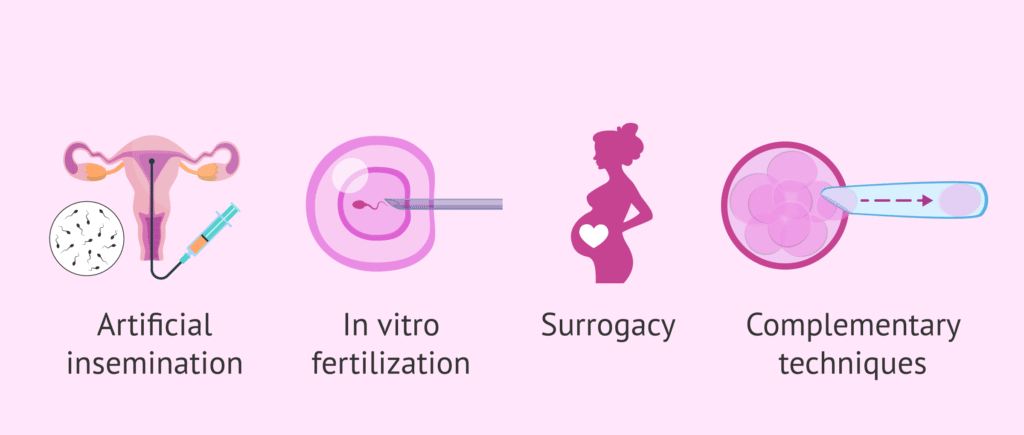
Unfortunately, there are not as many treatment options for sterility as there are for infertility. In other words, Sterility vs Infertility has better responses for the medical treatments. In actuality, there are no cures for sterility; instead, there are just ways to conceive.
Here, let’s look at these choices in more detail:
What Are The Treatment Options for Infertility?
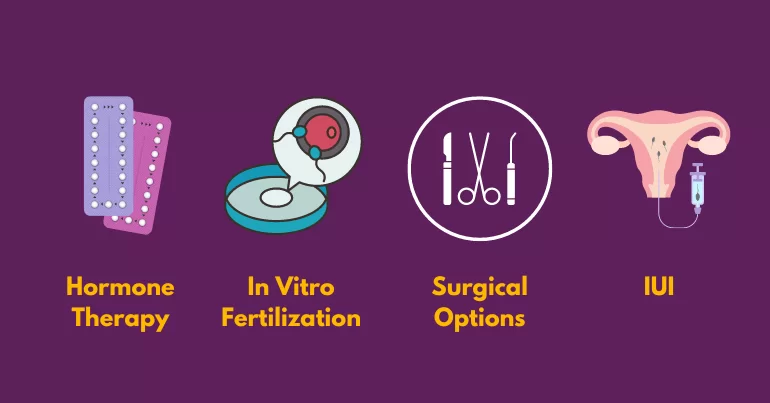
Depending on the underlying reason of infertility, treatment options may include:
• Inducing ovulation using medicine to prevent infertility related to egg release.
• Hormonal treatments to address hormonal problems in both men and women.
• Both men and women should adopt better lifestyles, such as managing stress, losing weight, getting enough sleep, and abstaining from alcohol.
• Procedures to treat varicocele, or obstructed tubes, fibroids, endometriosis, and adhesions.
• When alternative approaches are ineffective, advanced reproductive techniques like IVF, IUI, and ICSI are employed.
What Are The Other Alternatives for Couples Facing Sterility?
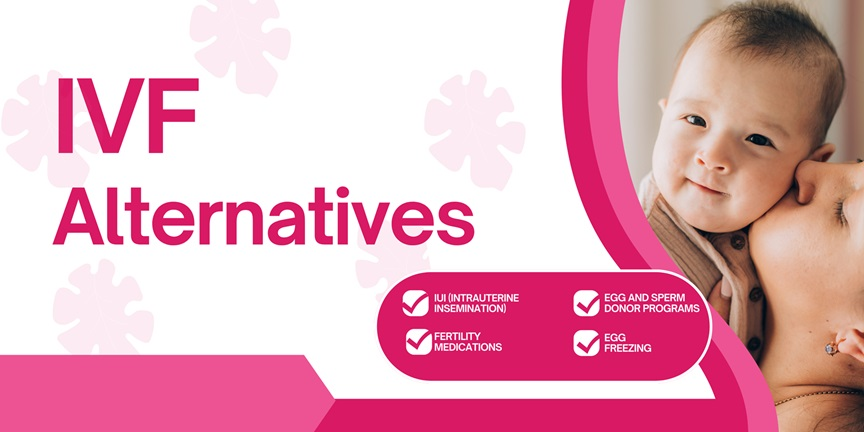
Infertile couples can enjoy parenthood in a number of ways as there are many options available in the medical sector. The natural chances of conceiving is prevented by infertility issues, although infertile couples have the various options mentioned below:
- A donor egg, sperm or embryo option is open and available if one of the partners is infertile;
- Surrogacy is another option if the woman is facing infertility issues
- Adoption will be the last choice if both of the partners are infertile.
Conclusion:
Ultimately, it can be said that Sterility vs Infertility have entirely different connotations. Comprehending both provides clarity on your future attempts to become pregnant and clears away any uncertainty. Treatments for infertility still struggle to achieve sterility, necessitating the use of alternative strategies.
One thing is clear, albeit the course of therapy may vary: early diagnosis enables couples to make options based on their potential. Therefore, don’t put off getting a precise diagnosis for anything you think might be infertility or sterility. So, contact for more details on Sterility vs Infertility now.