Are you curious about fertility preservation? Both Egg Freezing and embryo freezing are trending now-a -days. But still they are wondering which is a better one? And which one is offering a better success rate. It becomes critical to understand the differences between these two preservation methods and know what is their success rates and if you are thinking about maintaining your fertility, then which is the best for you.
Difference Between Egg Freezing And Embryo Freezing:
At the very first step, let’s compare the success rates of the methods, it is important to get a clear idea of what egg freezing and embryo freezing actually is all about and what do both the processes involve.
- Egg Freezing:
Oocyte cryopreservation is another name for egg freezing and it is basically the process of removing the eggs of a woman and freezing them just like that for future use. Later, when the couple is ready to have children, these eggs comes in use, gets into fertilization with sperm and then gets into your uterus as embryos.
- Embryo Freezing:
Embryo Freezing is a little different method. In order to make embryos, the eggs comes in collection and then fertilization takes place with the sperm. The resultant embryos are under preservation for future use. So, then whenever you are ready to get pregnant, these embryos gets into your uterus.
What Are The Key Points to Remember?
- Egg Freezing is helpful in preserving the unfertilized eggs for later use.
- Embryo Freezing is helps in storing the fertilized embryos.
Egg Freezing vs. Embryo Freezing Success Rate:

Now, let’s know about the most important part of these processes which is the main consideration i.e. success rates at Narela. After all, if you are thinking about fertility preservation and then knowing your chances of success is probably on the top of mind.
Egg Freezing Success Rate:
• The age of the lady has a significant impact on Egg Freezing success rates.
• When using the frozen eggs, women under 35 have a 70–80% chance of having a live birth.
• All the women who falls in the age bracket of 35-40 years, the rate gets lower to 50-70%.
• After the age of 40 years, the success percentage of a live birth from frozen eggs can actually decrease below 50%.
It is significant to note that egg freezing is still considered to be a relatively recent method as compared to embryo freezing, but long-term success rates may differ with time and depending on the patient’s situation.
Embryo Freezing Success Rate:
• Compared to egg freezing, Embryo Freezing often has a greater success rate.
• The live birth success rate from frozen embryos is between 75 and 95 percent for women under 35.
• Women who are aged 35-40, the success rate hovers between 60-75%.
• Even women over the age of 40 years have a higher probability of success using embryos with a success rate of 50-60% only.
The basic explanation for these greater success rates is because embryos that are once produced are more likely to survive the freezing and defrosting process compared to unfertilized eggs.
What Are The Pros and Cons of Egg Freezing vs. Embryo Freezing?
Pros Of Egg Freezing:
- Offers flexibility: You don’t need a sperm donor or partner at the time of egg freezing.
- You can anytime choose to fertilize your eggs at a later stage as whenever you are ready to conceive.
Cons:
- It has lower success rates as compared to embryos.
- The quality of eggs can degrade over time and specifically after the age 35 years.
Pros Of Embryo Freezing:
- It offers higher success rates than egg freezing.
- Embryos that can survive the freezing and defrosting process is still better than the eggs thawing.
Cons:
- This method requires a sperm donor or partner at the time of freezing.
- Ethical and emotional concerns: What will be happening if the embryos are unused?
Why Age Is A Matter Of Concern For The Process?
Age is a significant factor that impacts both egg and embryo freezing success rates. Your chances of a healthy pregnancy later on increase with the age at which you preserve your eggs or embryos.
Women under 35 have the highest success rates for both egg and embryo freezing. Due to the fact that the eggs of a woman will lose quality and quantity as she ages, which will lower the favourable chances of fertilization and a successful pregnancy.
So, in case you are considering any option, the sooner, the better!
How Choosing Between Egg Freezing and Embryo Freezing Is Done?
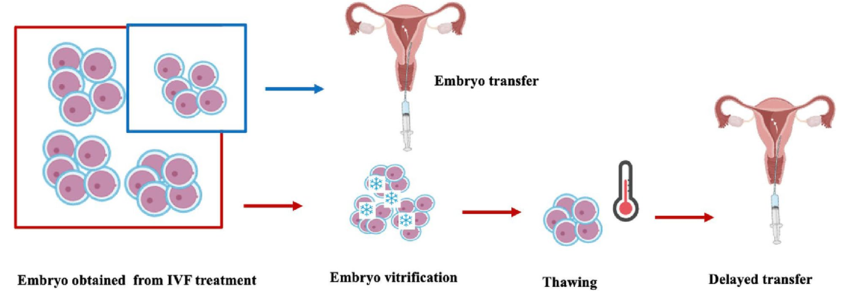
There is a whole lot of difference between the two but still it all comes down to your personal situation and what doctor thinks will work best for you. If you are not ready to commit to fertilizing your eggs yet, then egg freezing will give you the option to decide later while the preservation will be done now. On the other hand, if you are confident about using a sperm donor or partner’s sperm, embryo freezing will offer a higher success rate.
At Bansal IVF Fertility, we help all women every day to make wise and most informed decisions about fertility preservation. Either you want egg freezing or embryo freezing, our fertility specialists will help you round the clock through the process and help you determine the best option based on your unique needs.
Conclusion:
Both the processes of Egg Freezing and embryo freezing are equally valuable preservation techniques that are used for fertility later. But no matter what they both are serving different purposes and also have different success rates. Basically, embryo freezing is offering higher success rates and when egg freezing is considered it is providing more flexibility. So, understanding the key differences is important between these methods. It can help you make an informed decision about your fertility journey.Also, you can contact Bansal IVF in Sonipat for any further clarity and knowledge. Hurry up! At Bansal IVF Fertility clinics in Sonipat, the experts make all the difference. It is all about making difficult fertility processes easy to understand.